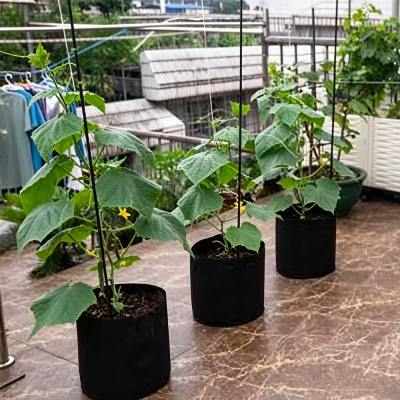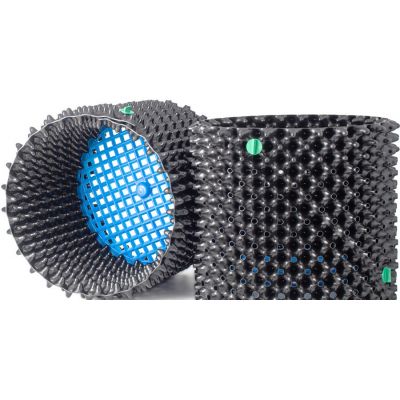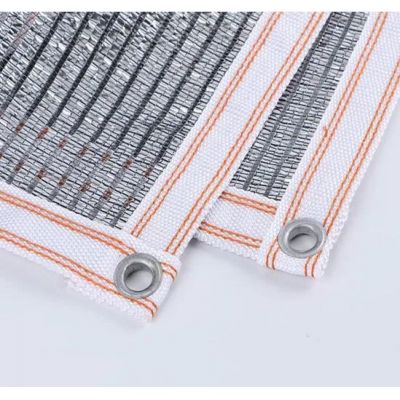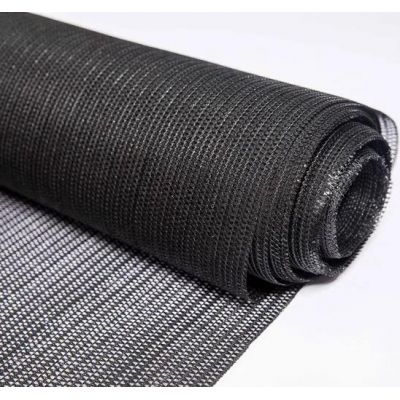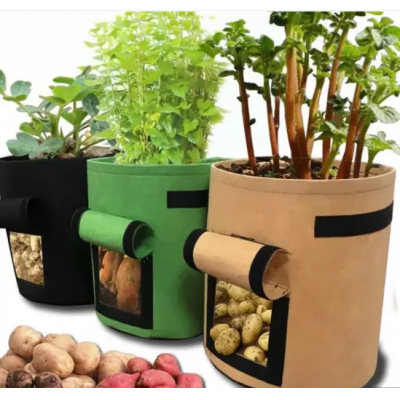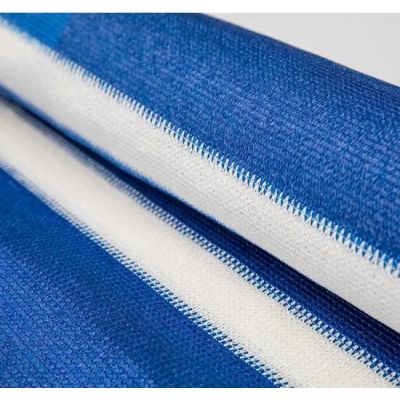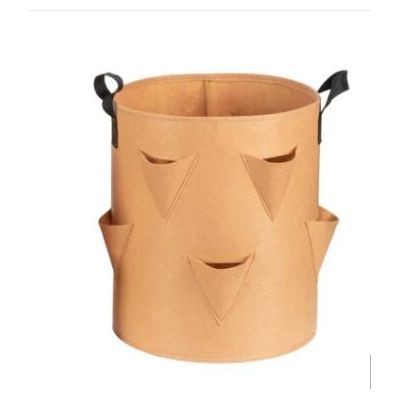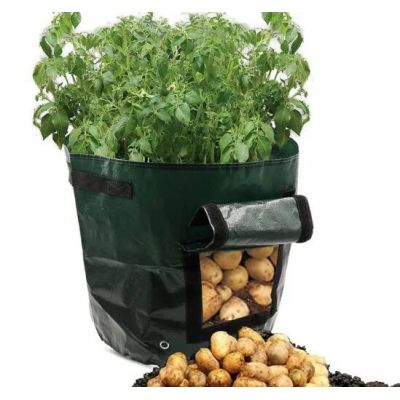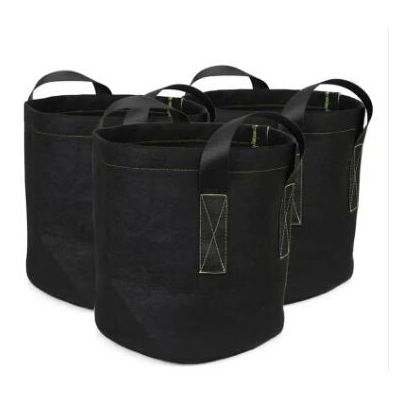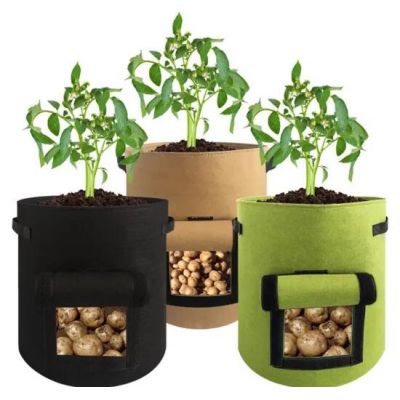
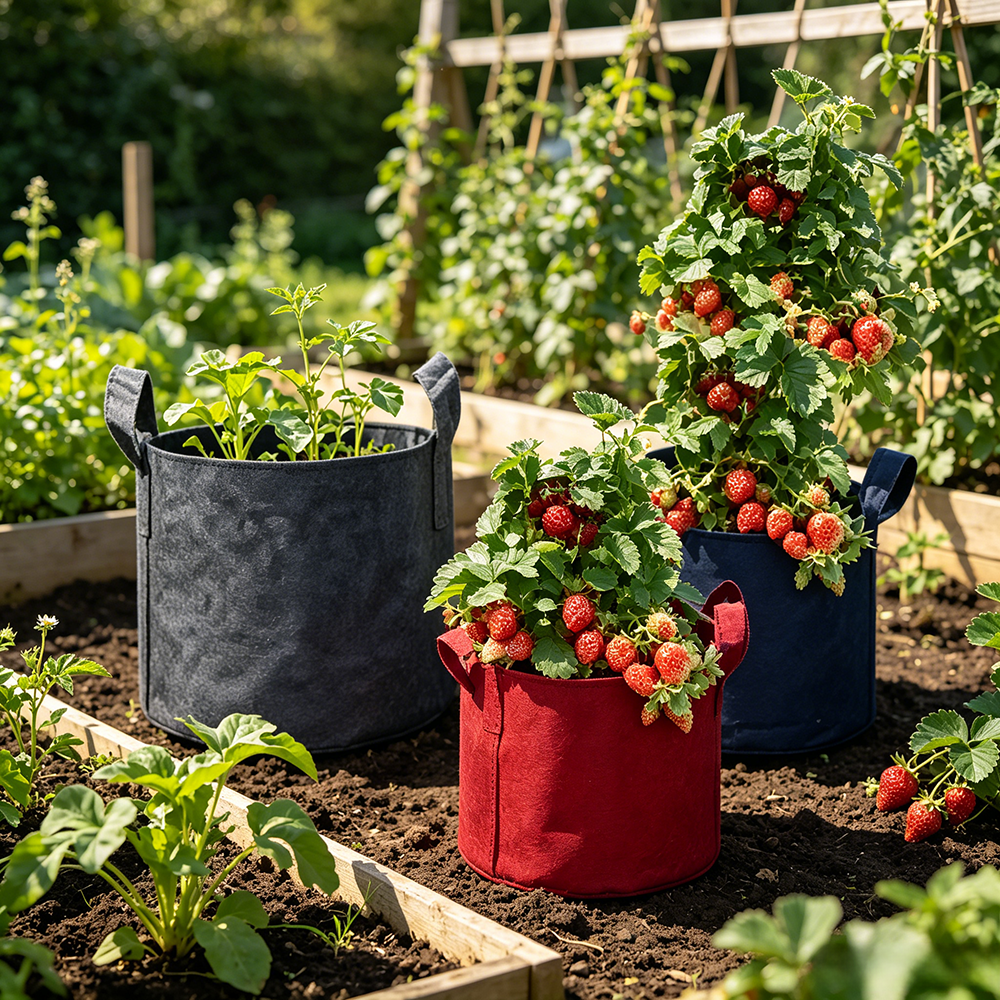
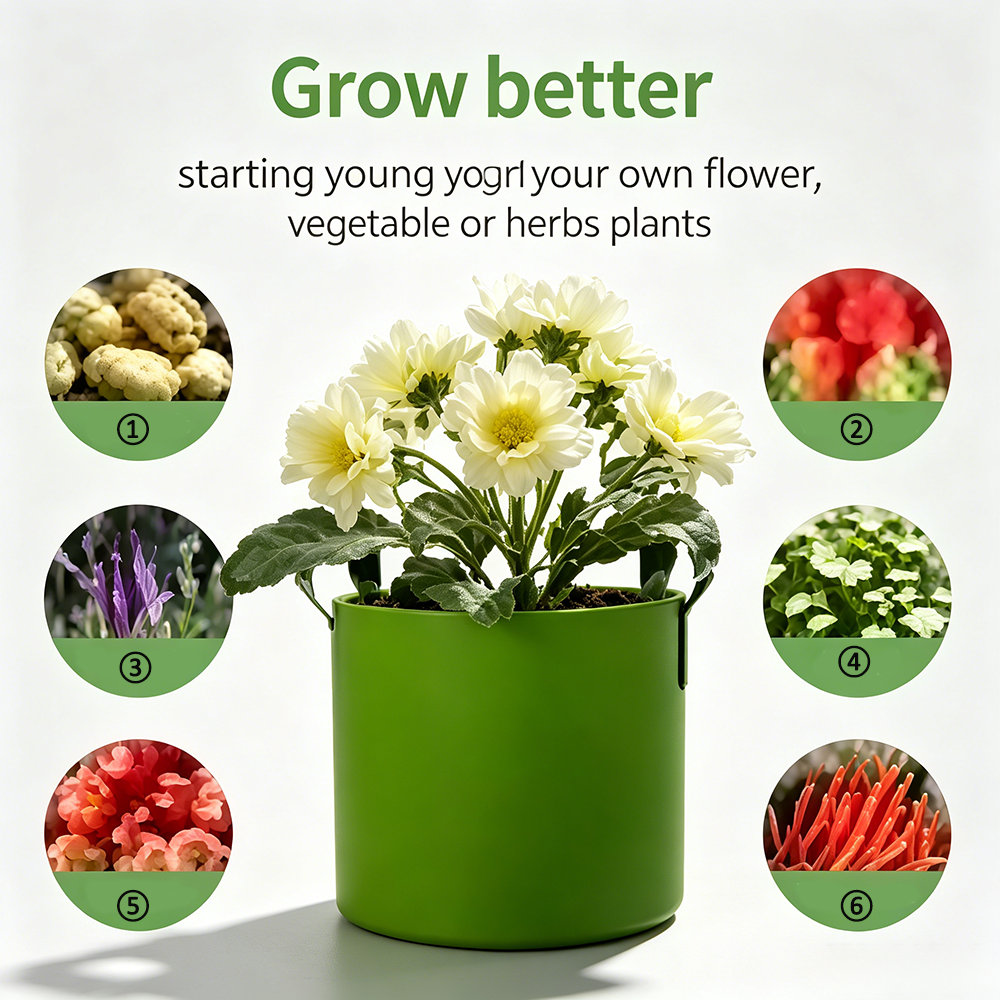
Here's the question every grower asks before buying fabric grow bags: what size do I actually need? The answer depends on your crop and grow cycle. Our UV-resistant fabric grow bags come in capacities from 1 to 34 gallons, with 260–320g/m² fabric weight, double-needle stitching, and air-pruning wall design. Five-year outdoor life. Round or square. Any colour. Biodegradable polyester non-woven. ISO 9001 and SGS certified. Factory direct from Sichuan Zhifang.
Every nursery operator knows the moment of frustration: you've potted up hundreds of plants in bags that are either too small—restricting root growth—or too large—wasting soil and space. That's where capacity flexibility and UV resistance make all the difference. Our fabric grow bags come in sizes from 1 gallon to 34 gallons, built from 260–320g/m² non-woven fabric with double-needle stitching throughout and air-pruning wall design. The UV-resistant material holds up to full sun exposure season after season. Whether you're starting vegetable seedlings in 1-gallon bags or growing two-year-old trees in 34-gallon containers, we've got the spec that fits. That's what makes these the go-to choice for commercial nurseries, landscapers, and home growers across North America, Europe, and Australia.
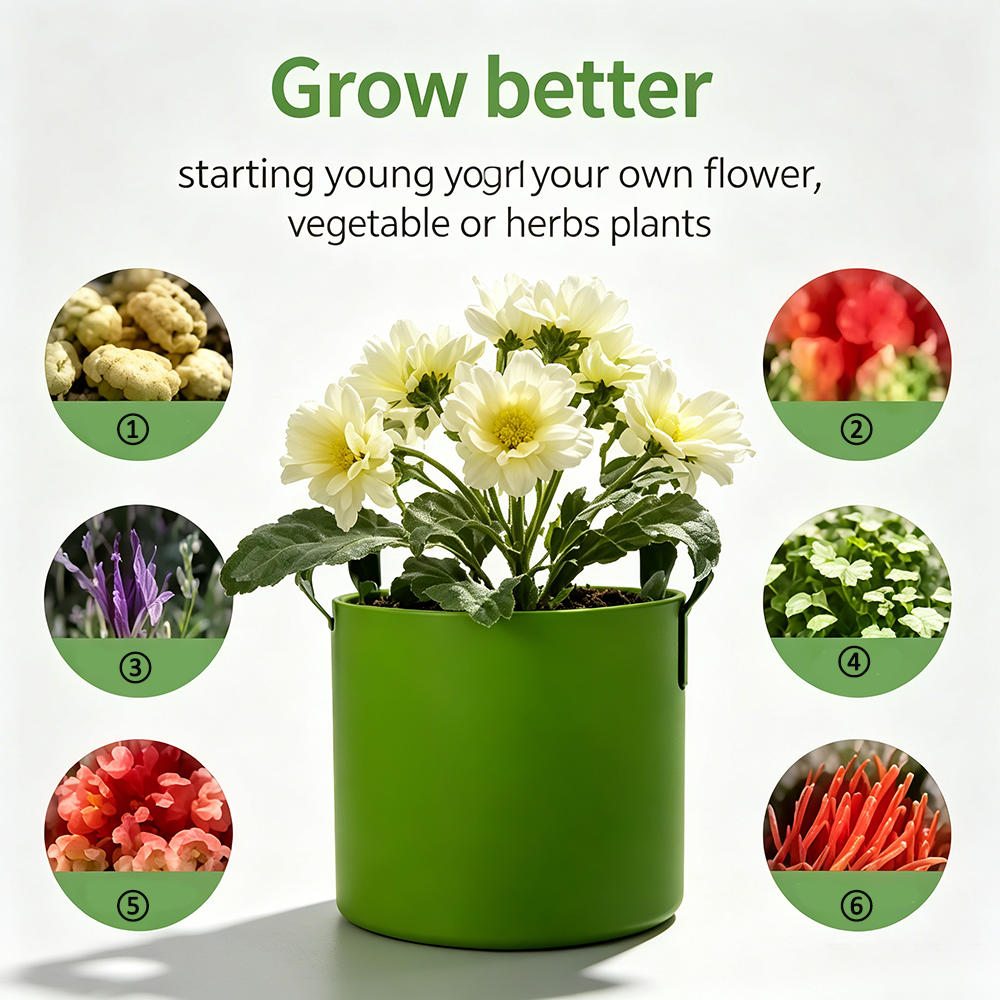
1. 1–34 Gallon Capacity Range – The Right Size for Every Crop
What it is: A full range of sizes from 1 gallon to 34 gallons—covering everything from vegetable starts to mature trees.
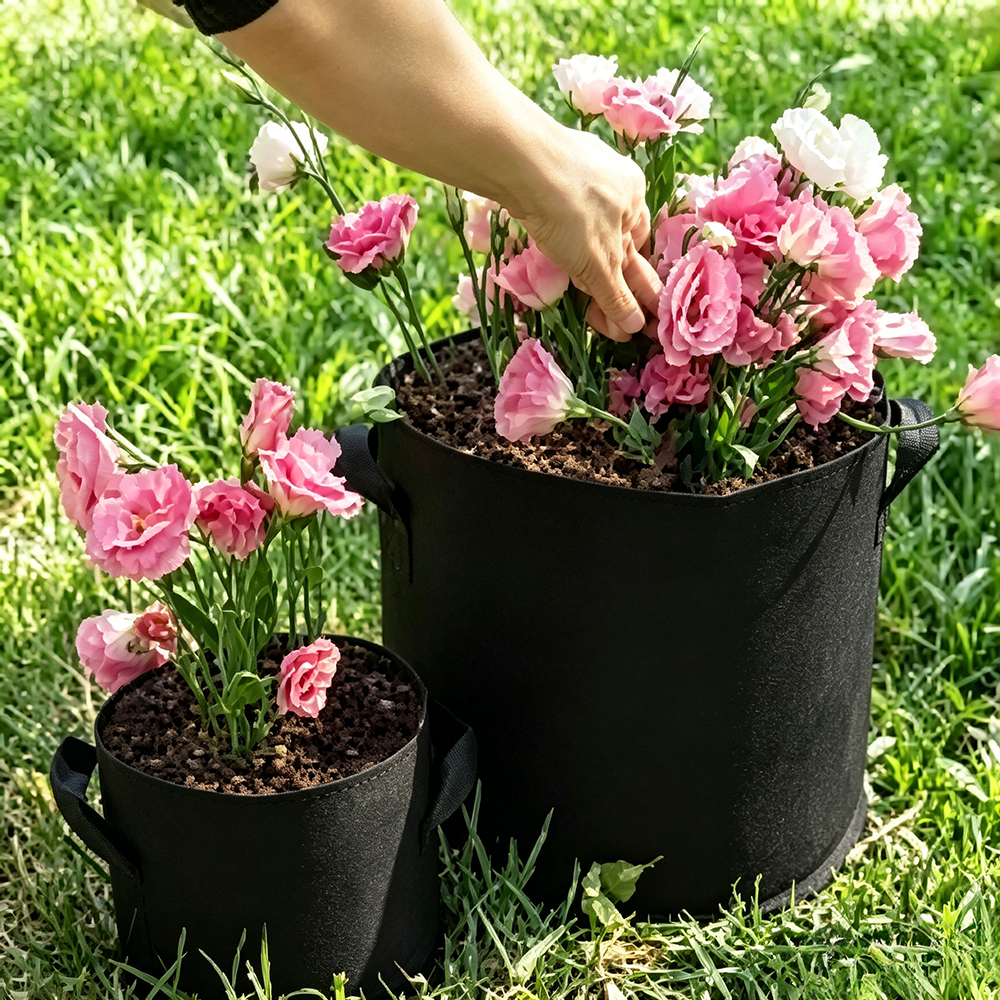
What it means in practice: Most people get this wrong: they guess the size and end up with either root-bound plants or wasted soil. The 1–3 gallon sizes are perfect for vegetable starts and herbs. 5–10 gallons handle tomatoes, peppers, and small shrubs. 15–34 gallons support trees and large perennials.
Why this standard matters: Right-sizing your grow bags reduces soil costs, improves root development, and makes handling easier at every stage.
2. UV-Resistant Fabric – Built for Full Sun Exposure
What it is: UV-stabilized polyester non-woven fabric engineered to resist degradation from prolonged sunlight exposure.
What it means in practice: The reason this specification matters is that non-UV-treated fabrics break down in 12–18 months of outdoor use. Our UV-resistant construction holds its integrity across five seasons in full sun.
Why this standard matters: If you're growing outdoors, UV resistance isn't optional—it's the difference between a bag that lasts and one that crumbles.
3. Air-Pruning Wall Design – Healthier Roots, Better Yields
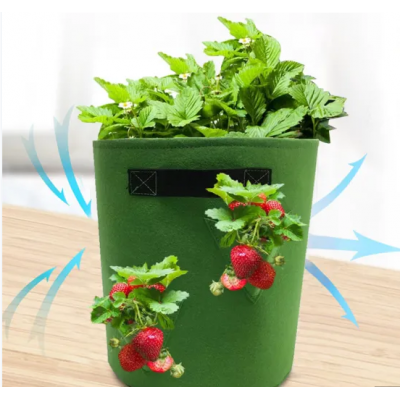
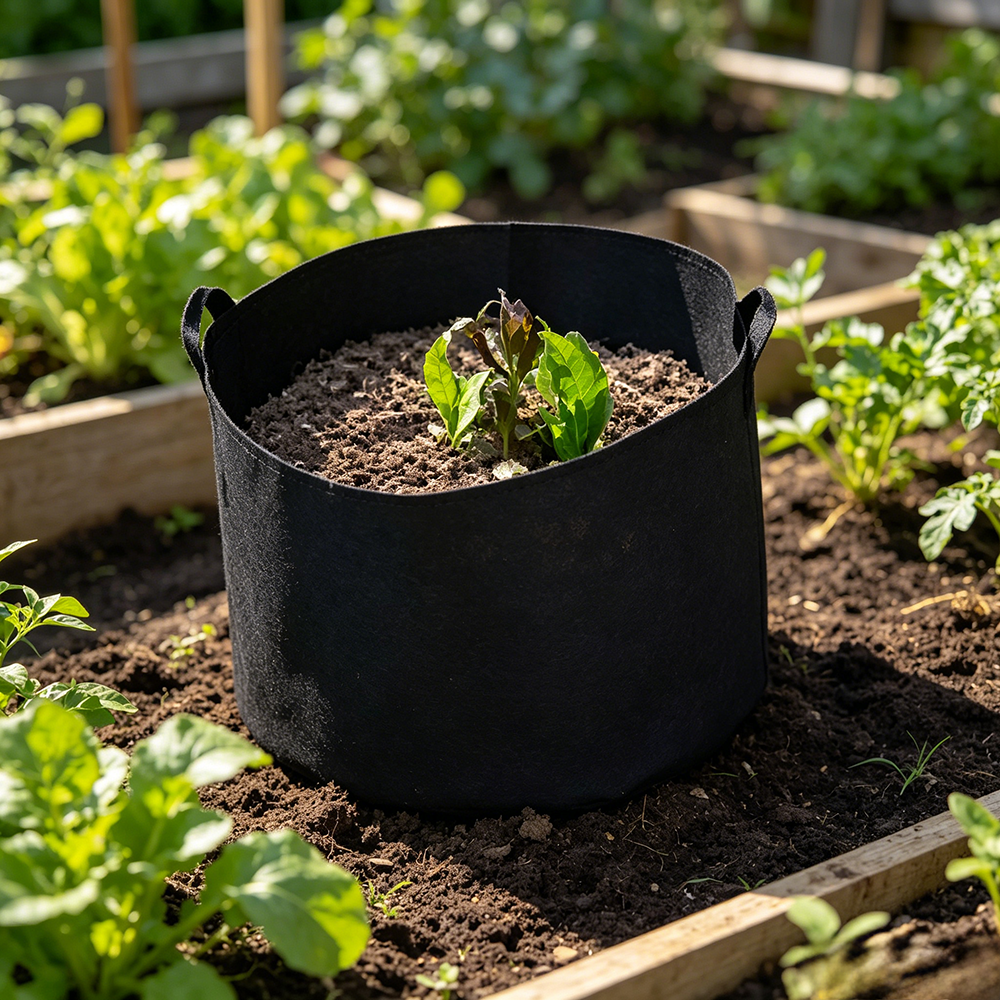
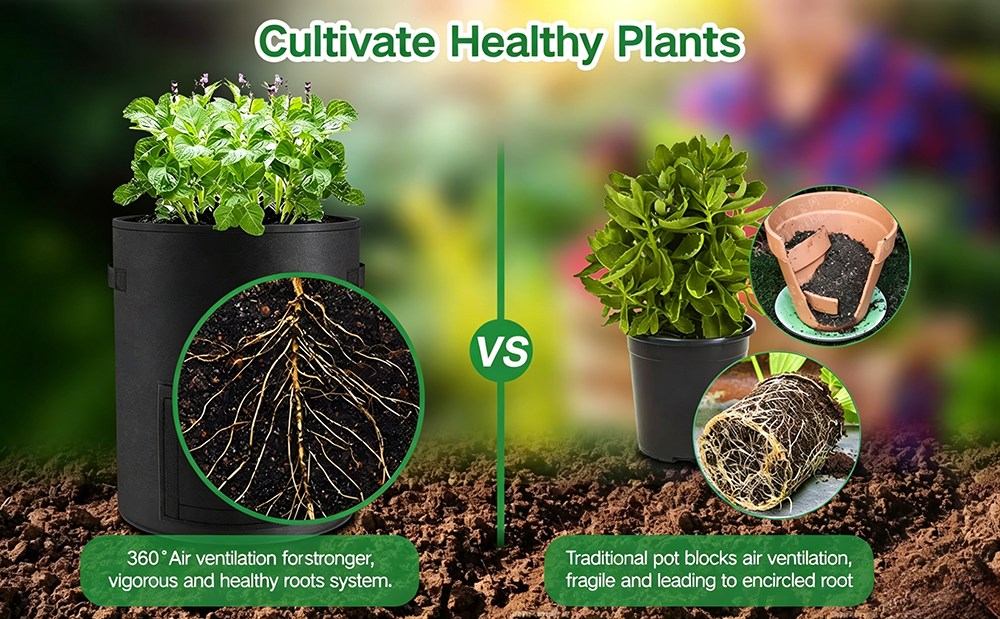
What it is: The non-woven fabric's porous structure stops root tips when they reach the bag wall, triggering lateral root development instead of circling.
What it means in practice: Here's what that means in practice: air-pruning produces fibrous, branched root systems instead of thick, spiralled roots. You pull a plant out of our bag and you see white, branched roots top to bottom. That translates to faster establishment after transplanting and better overall growth.
Why this standard matters: Root circling isn't just a cosmetic issue—it stunts the plant permanently. Air-pruning solves the problem before it starts.
4. 260–320g/m² Thickened Fabric – The Weight That Lasts
What it is: Four density grades from 260g to 320g per square metre—significantly heavier than the industry-standard thin bags.
What it means in practice: What the cheap spec sheets don't tell you is that most budget bags sit around 150g/m². Our 260g base is where commercial durability starts. The 320g grade handles heavy root crops and perennials season after season.
Why this standard matters: The fabric weight determines whether you're buying a one-season disposable or a multi-season investment.
5. Full Customization – Round, Square, Any Colour
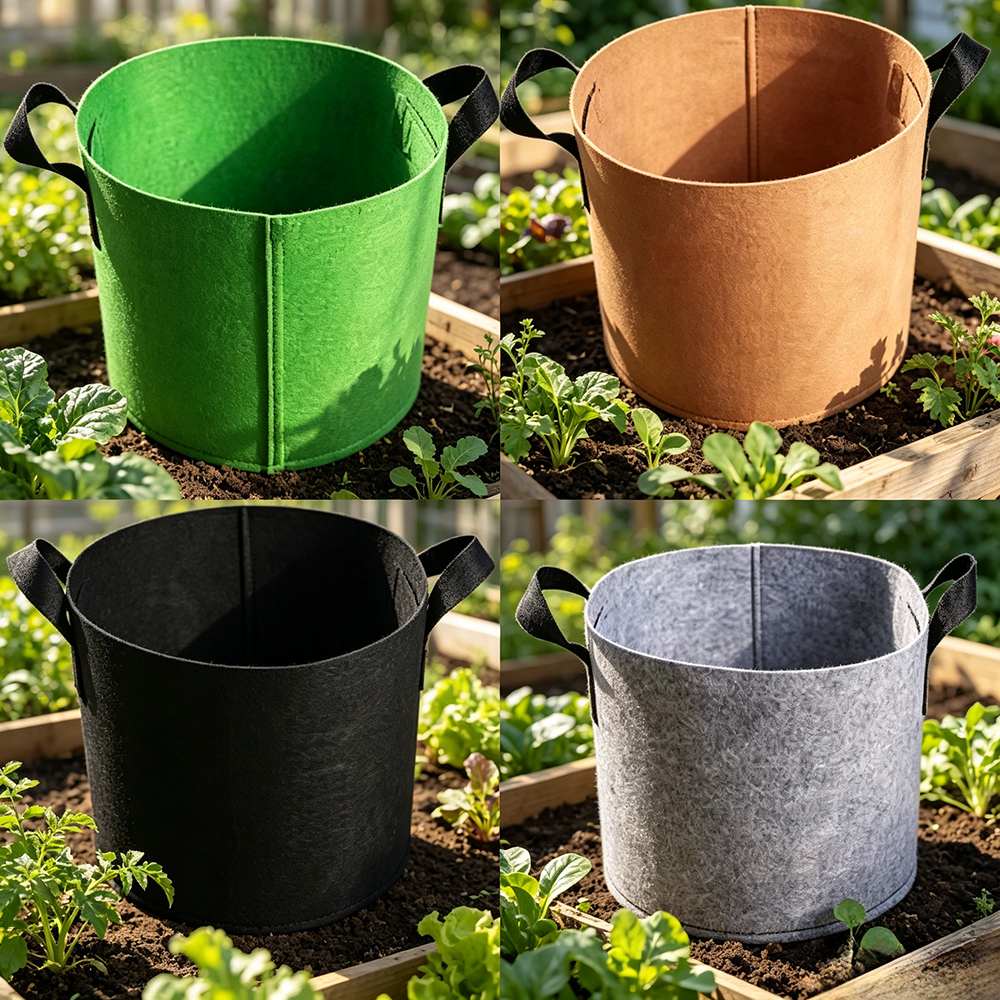
What it is: Round or square shapes, any colour from black to bright red, any diameter or depth—all customizable for volume orders.
What it means in practice: One thing that gets overlooked: not every crop needs the same bag shape. Square bags pack tighter on pallets and greenhouse benches. Round bags work better for certain root structures. We do both.
Why this standard matters: One shape doesn't fit every crop. Having options means you spec the bag to the crop, not the other way around.
Technical Specifications
| Parameter | Specification |
|---|---|
| Material | Polyester non-woven fabric, environmentally friendly & biodegradable |
| Weight | 260 / 280 / 300 / 320 g/m² (customizable) |
| Capacity | 1 – 34 gallons (size adjustable) |
| Shape | Round / Square |
| Colour | Black / White / Red / Blue / Green / Grey / Brown + any custom colour |
| Service Life | 5 years outdoors |
| UV Resistance | Engineered for full sun exposure across multiple seasons |
| Applications | Vegetables, fruit trees, medicinal plants, seedlings, ornamentals, indoor & outdoor planting |
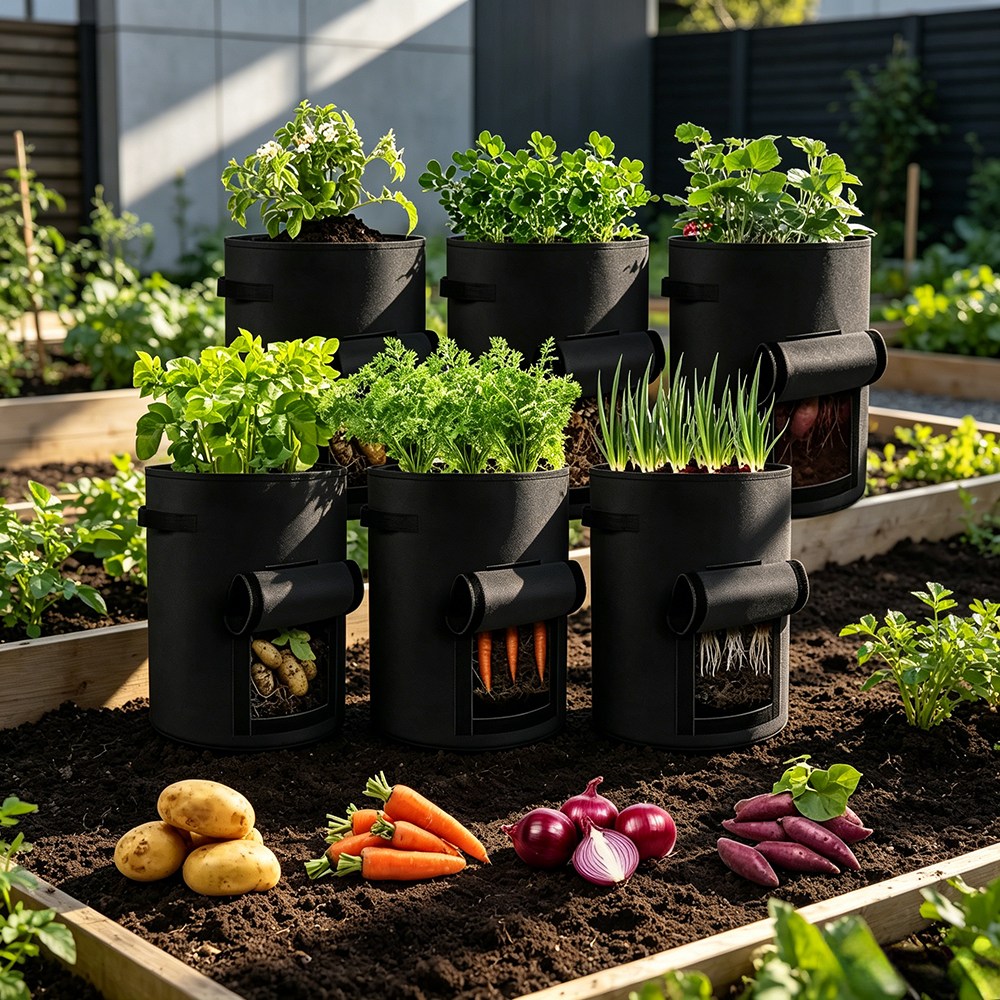
Vegetable production (tomatoes, peppers, cucumbers): 5–10 gallon bags in high-tunnel or greenhouse operations. Excellent drainage prevents waterlogging.
Tree and shrub nurseries: 15–34 gallon square bags for oak, maple, and fruit tree saplings. Deep root run encourages taproot development without circling.
Herb and vegetable starts: 1–3 gallon bags for seedling propagation and quick-turn crops. Lightweight and easy to handle.
Medicinal plant cultivation (ginseng, lavender): 10–15 gallon heavy-duty bags. Holds structure across multiple seasons.
Landscaping and green walls: Custom-sized bags for green wall installations. UV-stable for exposed city environments.
When you're comparing three different quotes for fabric grow bags, here's what actually matters beyond the price per bag.
What you'll see from most suppliers:
Limited size range – often just one or two sizes
150–200g/m² fabric weight (lightweight, single-season at best)
No UV stabilization – fabric breaks down in 12–18 months
Single-needle seams throughout (they'll split)
"Biodegradable" material that starts breaking down in year two
Limited colour and shape options
What you get from us:
Full 1–34 gallon size range – every crop, every stage
260–320g/m² fabric weight (multi-season durability)
UV-stabilized fabric – five-season outdoor life
Double-needle stitching at every seam (no blowouts)
UV-stabilized, biodegradable fabric with controlled 5-year degradation
Any colour, any size, round or square
Here's what that looks like in practice.
We've had commercial nurseries order 5-gallon bags for vegetable starts and 20-gallon bags for tree production—all from the same supplier, same quality standard, same reliable lead time. That's the kind of operational simplicity you earn when the product range covers your full production cycle.
One thing you'll notice when you order from us: every pallet of bags carries our ZF identification tags. We've had customers come back five years later for replenishment orders, recognize the tag, and tell us, "Same bags. Good to know you're still around." That's not marketing—that's repeat business earned one order at a time.
Here's one more thing we don't do: we don't push every customer to the heaviest grade or largest size. If you're growing quick-turn herbs for one season, 260g in a 3-gallon bag is plenty. If you're holding two-year-old trees in open fields, you need 320g in a 20-gallon bag. We'll ask you what you're growing and how long you plan to hold it. The right answer depends on your crop—not on how much we want to sell you.
Q: What is the lifespan of your shade nets, ground covers, and fence screens?
A: Shade nets and ground covers typically last 3-5 years under normal outdoor conditions, while fence screens offer a lifespan of 5-7 years. Our HDPE knitted fabrics are UV-stabilized to resist degradation from prolonged sun exposure. Sichuan Zhifang Net Industry ensures that all products are engineered for long-term field performance, with air pruning pots and planting bags also providing 3-5 years of reliable service in nursery applications.
Q: Can I customize the size, color, or specifications for my order?
A: Yes, we offer full customization including dimensions, colors, shading rates, and fabric weights. You can specify custom sizes for shade nets, ground covers, and fence screens, or select specific volumes (4-15 gallons) for planting bags. Simply share your project requirements with our team at Sichuan Zhifang Net Industry, and we will design a tailored solution that meets your exact growing or construction needs.
Q: How do I choose the right product for my specific application?
A: The choice depends on your primary goal. Use shade nets for temperature control and crop protection; ground covers for weed suppression and moisture retention; air pruning pots for healthy root development; and fence screens for privacy and wind reduction. Our experts at Sichuan Zhifang Net Industry can recommend the optimal product based on your climate, crop type, and budget to ensure the best value.
Q: What is your warranty and quality guarantee policy?
A: We provide a 5-year quality guarantee against material defects for all products, including shade nets, ground covers, and fence screens. Our HDPE and non-woven fabrics are manufactured under strict ISO 9001 standards to ensure consistent quality. Sichuan Zhifang Net Industry offers technical support and replacement parts throughout the product lifespan.
Q: What is the lead time for bulk orders?
A: Peak season lead time is approximately 30-45 days, while off-season orders are typically fulfilled within 20-25 workdays. Custom orders may require additional time for production and shipping. We recommend placing orders in advance to secure your preferred specifications, and our logistics team at Sichuan Zhifang Net Industry will provide real-time updates throughout the shipping process.
Q: How do I choose the right gallon size for my crop?
A: The short answer: 1–3 gallons for herbs and vegetable starts; 5–10 gallons for tomatoes, peppers, and small shrubs; 15–34 gallons for trees and large perennials. The longer answer: the right size depends on your crop's root depth and your target grow-out period. A tomato plant needs 5–7 gallons for a full season. A two-year tree needs at least 15 gallons. If you're unsure, send us your crop list and we'll recommend the exact size.
Q: Will the UV resistance really last five years?
A: Yes, under normal outdoor conditions. Our fabric is engineered with UV stabilizers integrated at the polymer level—not surface-coated, which wears off. The 5-year service life is based on year-round outdoor exposure in temperate climates. In high-UV regions like Arizona or the Middle East, you may see a shorter lifespan. In protected greenhouse conditions, it can last longer.
Q: Can I reuse these bags for different crops?
A: Yes, with proper cleaning between cycles. The fabric doesn't retain pathogens the way plastic pots do, which is one advantage of non-woven materials. We recommend emptying, cleaning, and drying bags between crop types—especially if you're switching between disease-susceptible crops like tomatoes and potatoes. Commercial nurseries often rotate crops in the same bags with good results.